Ontario legal information · Ottawa and Eastern Ontario
“I had the right of way” is a conclusion, not the complete record.
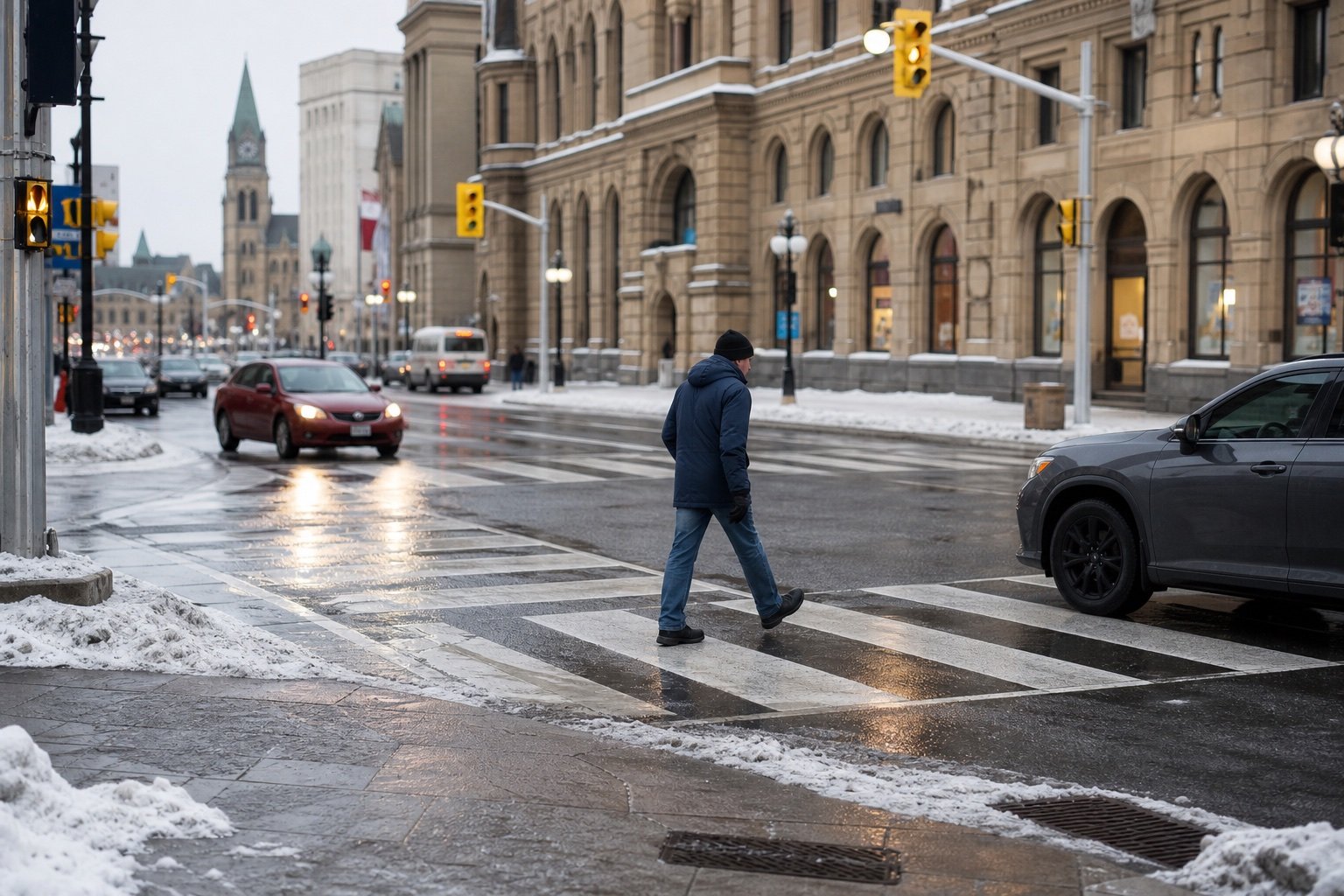
Start with each vehicle’s approach, lane, direction, signal phase, turning movement and point of impact. Then identify what any witness or recording could actually see.2
Insurance fault allocation and civil negligence can overlap without being identical. A charge may be relevant, but the injury claim should be tested against all available evidence rather than waiting for one official document.
Responsibility and insurance should be mapped separately.
Drivers and owners
More than one driver may share responsibility, and vehicle ownership or permission can affect the claim.
Road authority or contractor
Signal malfunction, sight obstruction or road work may justify a separate investigation, not an automatic claim.
Accident-benefit insurer
Benefits can respond while the intersection evidence is still being gathered.
Build the sequence from sources that do not depend on memory alone.
Identify nearby traffic, transit, business or residential cameras and request material promptly.
Record where the person was, what blocked their view and which movement they observed.
Preserve lane, heading, impact location, rest position and damage photographs.
Connect the collision to treatment, work limits and changes in daily activity.
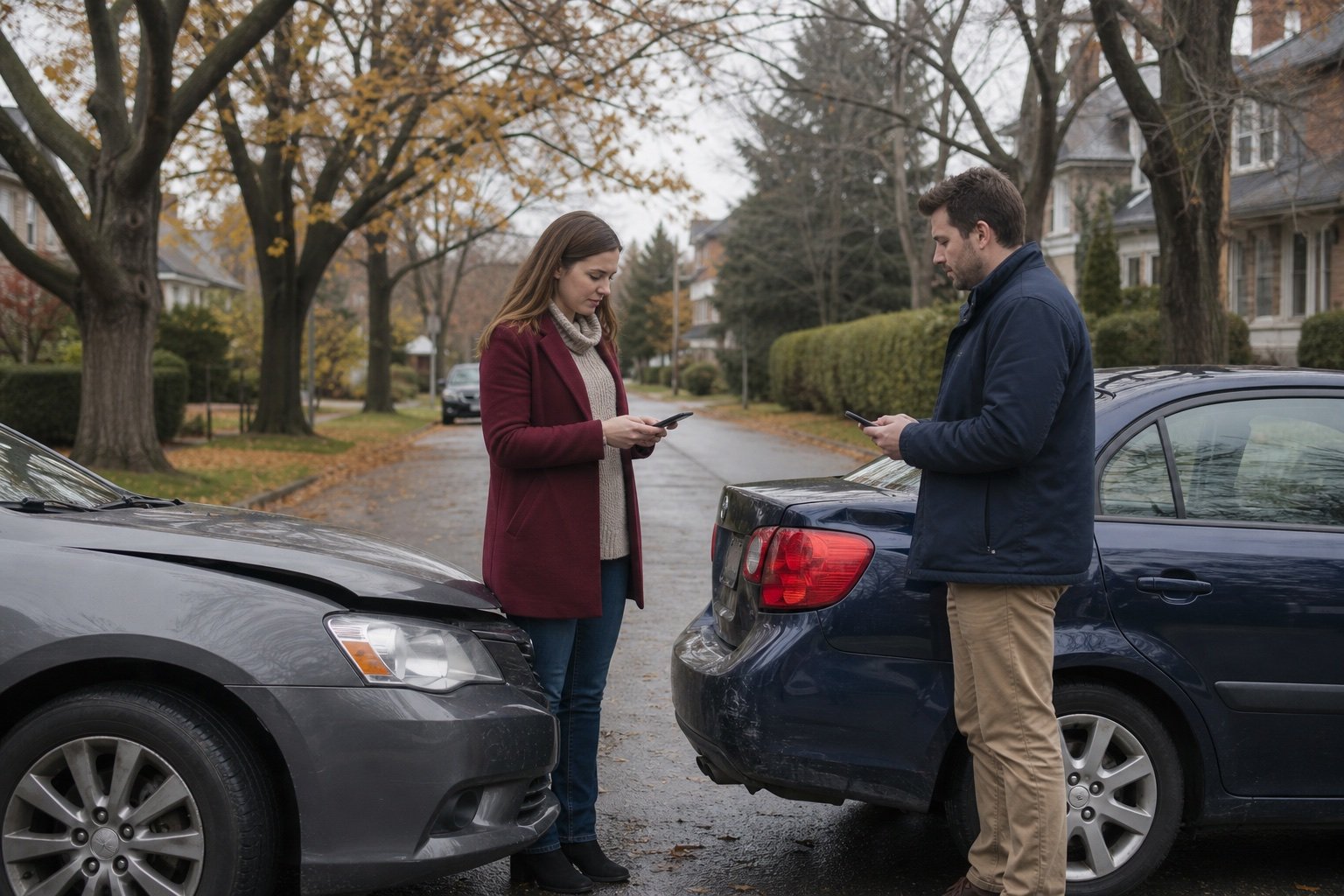
Some of the best intersection evidence is overwritten quickly.
Scene video, vehicle data and witness recollection can become unavailable well before a civil limitation period expires. Preserve them as soon as the responsible holder can be identified.3
The collision report, insurer notice, accident-benefit forms and civil claim each serve a different purpose. Track delivery and response dates for each.
How a personal injury lawyer may help after this collision.
The lawyer's role should be tied to this accident: identify who may be responsible, find every policy that may respond, preserve evidence and build the claim around the person's actual recovery and loss.
- Reconstruct the approach and signal sequence
- Identify all responsible parties and available policies
- Preserve third-party video and electronic vehicle material
- Coordinate injury evidence across benefit and liability claims
Not every file requires every step or legal representation. The work should respond to the actual dispute, evidence gap or decision that is approaching.
Sources and legal references
These official sources provide the legal and procedural foundation for this page. Their current wording and the facts of the claim control.
View 4 sources
- Ontario — Fault Determination Rules
Insurance fault rules for common automobile collision configurations.
Back to footnote ↑ - Ontario — Highway Traffic Act
Ontario road-use duties and the evidentiary rule that may apply when a motor vehicle injures a pedestrian or cyclist.
Back to footnote ↑ - Ontario — Limitations Act, 2002
The basic limitation period and discoverability framework.
Back to footnote ↑ - Ontario — Statutory Accident Benefits Schedule
The current regulation governing Ontario automobile accident benefits.