Ontario legal information · Ottawa and Eastern Ontario
The injury’s location and treatment do not tell the whole story.
Document displacement, joint involvement, surgery, hardware, infection, delayed union, nerve or vascular issues and rehabilitation. Ask what prognosis exists for pain, range, strength and future treatment.2
A temporary restriction can still create significant income, care and household loss. Long-term evidence should distinguish resolved, ongoing and contingent problems.
Several sources may fund different parts of recovery.
Accident benefits
Eligible treatment, care and disability benefits may apply after vehicle accidents.
LTD or workplace benefits
Employment-related coverage may respond under separate tests.
Civil damages
The responsible party claim addresses uncompensated past and future loss.
Organize the file by healing, function and loss.
Keep films, reports, operative notes and hardware information.
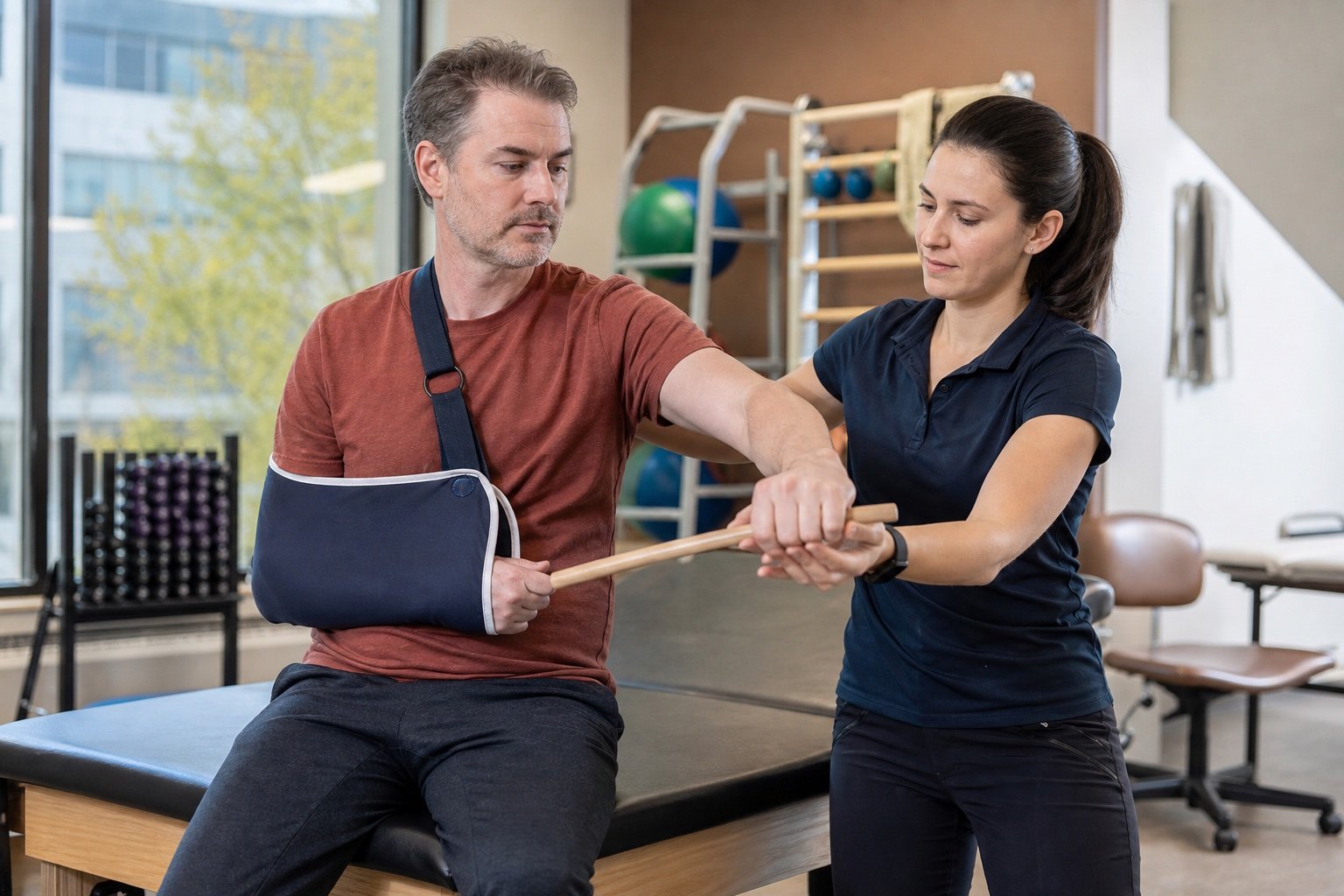
Track immobilization, weight bearing, lifting, driving and care needs.
Document range, strength, pain and treatment response.
Obtain supported opinions on hardware, arthritis and later procedures.

Do not value the claim from the emergency diagnosis alone.
Allow enough recovery and specialist follow-up to understand residual function and future risk.3
Preserve wage, caregiving, transportation and out-of-pocket losses as they occur.
How a personal injury lawyer may help build this part of the claim.
The legal work should translate the diagnosis into reliable evidence about causation, treatment, function, future needs and financial loss without overstating what the medicine can prove.
- Connect acute treatment to long-term prognosis
- Quantify temporary and permanent functional loss
- Coordinate insurance and employment benefits
- Assess future care and income contingencies
Not every file requires every step or legal representation. The work should respond to the actual dispute, evidence gap or decision that is approaching.
Sources and legal references
These official sources provide the legal and procedural foundation for this page. Their current wording and the facts of the claim control.
View 4 sources
- Ontario — Negligence Act
Shared fault and contribution between responsible parties.
Back to footnote ↑ - Ontario — Statutory Accident Benefits Schedule
The current regulation governing Ontario automobile accident benefits.
Back to footnote ↑ - Ontario — Limitations Act, 2002
The basic limitation and discoverability framework.
Back to footnote ↑ - Ontario — Rules of Civil Procedure
Civil procedure governing documents, examinations, experts and trials.