Ontario legal information · Ottawa and Eastern Ontario
Start with the real change, then test the legal route.
Compare prior complaints, work and recreation with the immediate mechanism and subsequent restriction.2
Surgery recommendations, injections and therapy response may help explain prognosis, but no single intervention determines legal value.
Keep the connected questions separate.
Civil damages
Prove accident-related aggravation and loss.
Available benefits
Coordinate treatment and disability benefits.
Future needs
Assess future work restrictions and care where supported.
Build a record that another person can verify.
Mechanism, prior records, imaging and clinical tests.
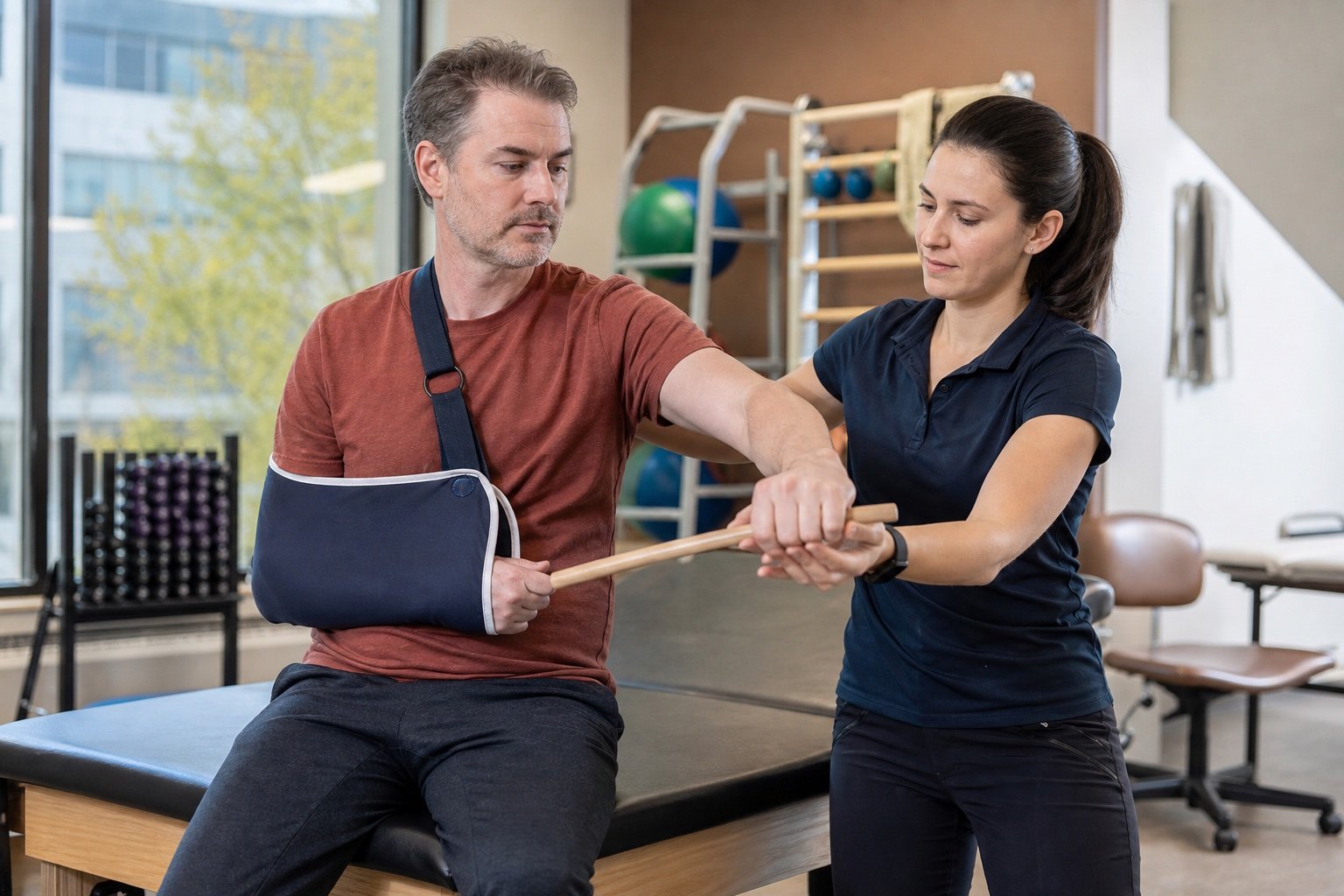
Physiotherapy, injections, consultation and surgical course.
Overhead work, lifting, dressing, sleep and driving.
Job demands, accommodations and insurer decisions.
Protect the next decision before the record is complete.
Obtain relevant pre-accident records rather than making an absolute no-history claim that can be disproved.3
Revisit valuation after treatment choices and functional prognosis are clearer.
How a personal injury lawyer may help build this part of the claim.
The legal work should translate the diagnosis into reliable evidence about causation, treatment, function, future needs and financial loss without overstating what the medicine can prove.
- Build the before-and-after shoulder history
- Address degeneration accurately
- Measure repetitive and overhead tolerance
- Connect prognosis to occupational demands
Not every file requires every step or legal representation. The work should respond to the actual dispute, evidence gap or decision that is approaching.
Sources and legal references
These official sources provide the legal and procedural foundation for this page. Their current wording and the facts of the claim control.
View 3 sources
- Ontario — Negligence Act
Shared fault and contribution between responsible parties.
Back to footnote ↑ - Ontario — Statutory Accident Benefits Schedule
The current regulation governing Ontario automobile accident benefits.
Back to footnote ↑ - Ontario — Limitations Act, 2002
Ontario's basic limitation and discoverability framework.
Back to footnote ↑