Ontario legal information · Ottawa and Eastern Ontario
Start with the real change, then test the legal route.
Compare the driver’s logs with electronic logging, engine, toll, fuel, phone, delivery and dispatch records rather than relying on one source.2
Fatigue must still be connected to the collision through observations, driving behaviour, reaction, lane movement or expert analysis.
Keep the connected questions separate.
Responsibility
Assess the driver’s lookout, speed, control and compliance with safety duties.
Available insurance
Examine whether the carrier’s schedules, supervision or practices contributed.
Uncompensated loss
Identify fleet, trailer, cargo and excess policies before valuing available recovery.
Build a record that another person can verify.
Scene video, dashcam and observations about vehicle movement.
Emergency and post-collision records relevant to alertness or medical events.
The injured person’s recovery and long-term functional record.
Driver logs, ELD data, dispatch messages, receipts and preservation notices.
Protect the next decision before the record is complete.
Commercial electronic records can be overwritten, so targeted preservation should be sent promptly.3
A regulatory breach may be important evidence but does not replace proof of causation and loss.
How a personal injury lawyer may help after this collision.
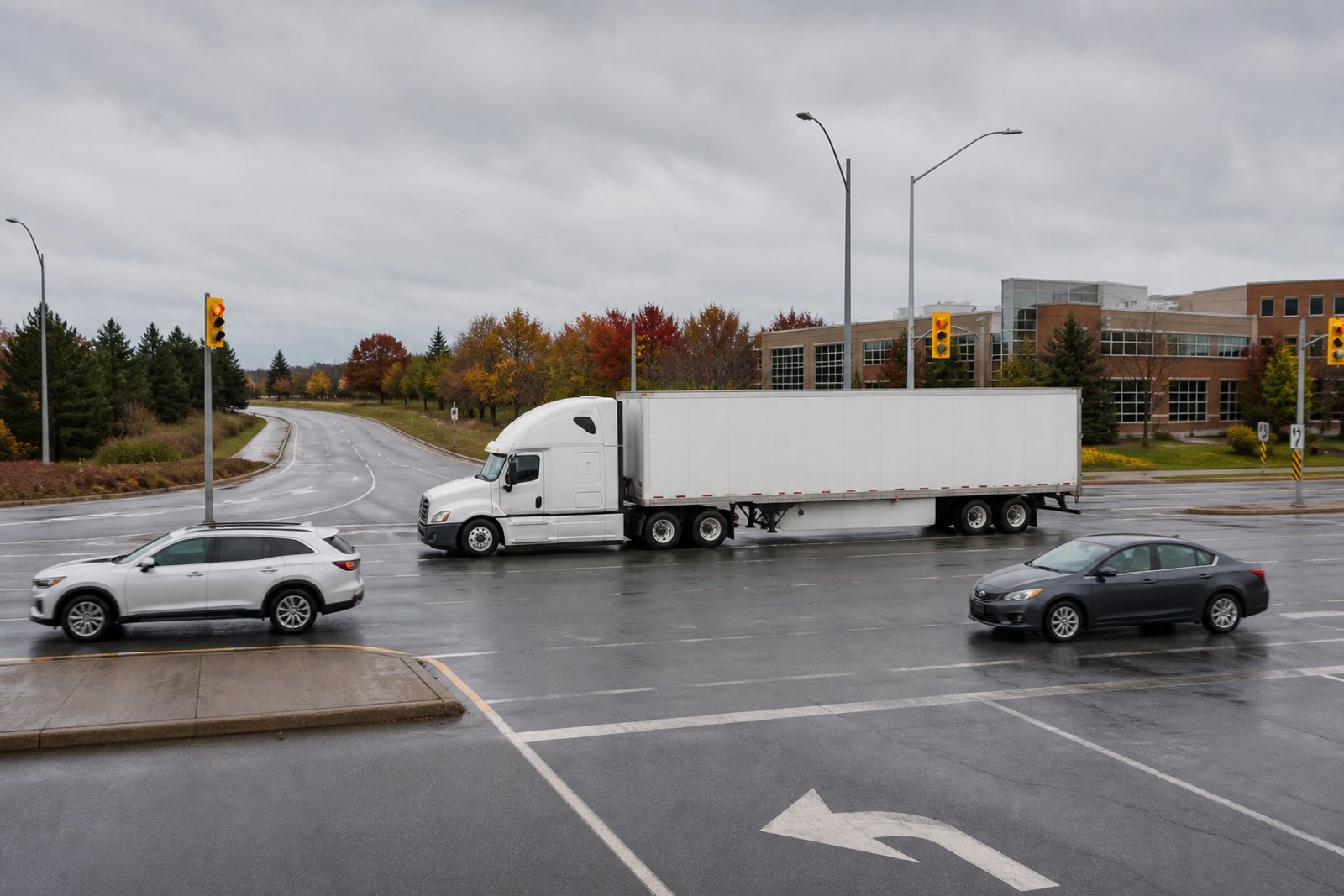
The lawyer's role should be tied to this accident: identify who may be responsible, find every policy that may respond, preserve evidence and build the claim around the person's actual recovery and loss.
- Secure carrier and electronic records
- Compare logs against independent timestamps
- Assess corporate as well as driver conduct
- Identify all commercial insurance
Not every file requires every step or legal representation. The work should respond to the actual dispute, evidence gap or decision that is approaching.
Sources and legal references
These official sources provide the legal and procedural foundation for this page. Their current wording and the facts of the claim control.
View 4 sources
- Ontario — Highway Traffic Act
Ontario road-use, vehicle and reporting duties.
Back to footnote ↑ - Ontario — Negligence Act
Shared fault and contribution between responsible parties.
Back to footnote ↑ - Ontario — Limitations Act, 2002
Ontario's basic limitation and discoverability framework.
Back to footnote ↑ - Ontario — Rules of Civil Procedure
Civil procedure governing pleadings, discovery, experts and trials.