Ontario legal information · Ottawa and Eastern Ontario
The person, family and clinicians may see different parts of the change.
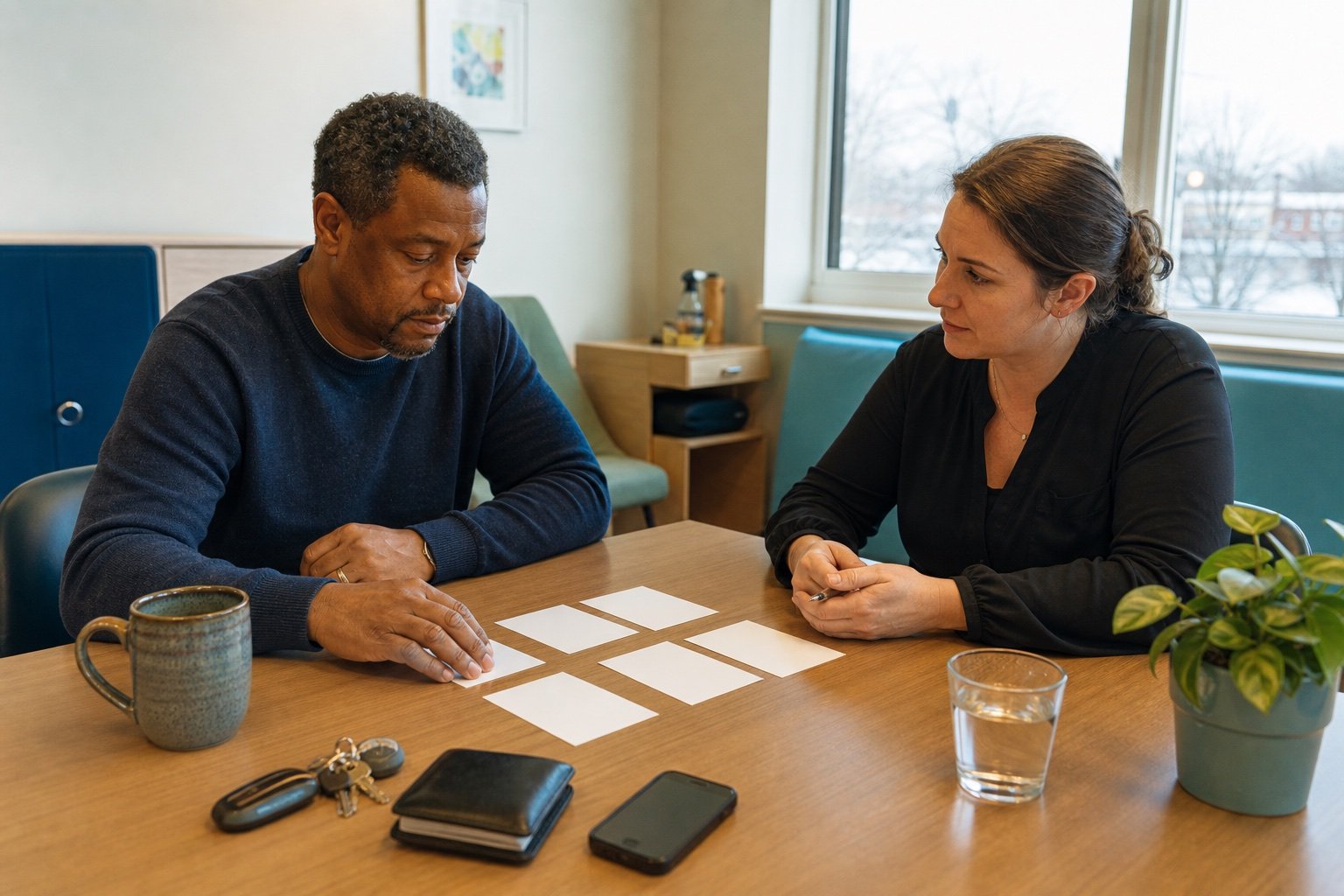
Clinical records may address attention, memory, executive function, mood and behaviour. Family evidence can describe routines, conflict, supervision and lost independence. Work evidence can show errors, pace or difficulty adapting.2
Prior personality, education, health and stressors should be addressed openly. A fair analysis distinguishes new change, worsening and unrelated difficulty.
Evidence should be coordinated without becoming repetitive.
Treatment and rehabilitation
Clinical goals address function, strategy and safety.
Benefit claims
Supervision, treatment and disability tests require defined proof.
Civil damages
Future care, income and relationship losses need a supported prognosis.
Use observations that can be placed in context.
Describe the same task or role before and after injury.
Keep neurological, psychological, occupational and speech-language records.
Record errors, prompts, pace, attendance and accommodations.
Track cueing, supervision, conflict and tasks taken over.

Capacity and safety decisions should not wait for litigation evidence.
Urgent driving, work, medication and supervision questions belong with qualified clinicians.3
Long-term opinions should account for rehabilitation, adaptation and the condition’s stability.
How a personal injury lawyer may help build this part of the claim.
The legal work should translate the diagnosis into reliable evidence about causation, treatment, function, future needs and financial loss without overstating what the medicine can prove.
- Coordinate clinical and lay observations
- Protect privacy while collecting relevant history
- Quantify supervision, care and employment effects
- Use experts for defined questions
Not every file requires every step or legal representation. The work should respond to the actual dispute, evidence gap or decision that is approaching.
Sources and legal references
These official sources provide the legal and procedural foundation for this page. Their current wording and the facts of the claim control.
View 3 sources
- Ontario — Rules of Civil Procedure
Civil procedure governing documents, examinations, experts and trials.
Back to footnote ↑ - Ontario — Statutory Accident Benefits Schedule
The current regulation governing Ontario automobile accident benefits.
Back to footnote ↑ - Ontario — Limitations Act, 2002
The basic limitation and discoverability framework.
Back to footnote ↑