Ontario legal information · Ottawa and Eastern Ontario
Crosswalk labels do not replace a complete reconstruction.
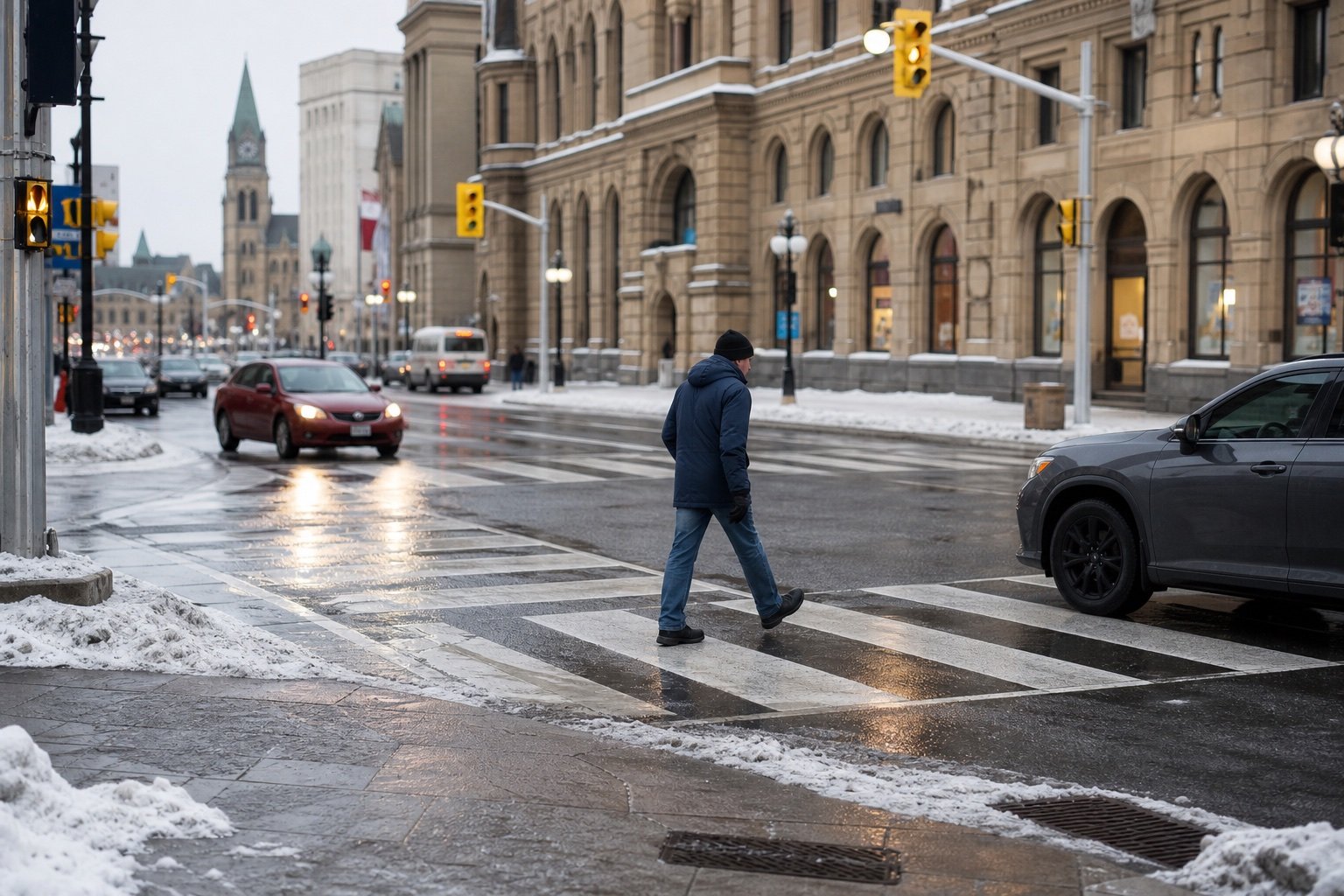
Identify where the person entered, the signal or sign, vehicle direction, turn, lighting, clothing, obstruction and driver viewpoint. The exact statutory and common-law duties depend on the facts.2
Ontario’s reverse-onus provision can place an evidentiary burden on the driver or vehicle owner in certain civil claims. It does not guarantee an outcome or eliminate analysis of the pedestrian’s conduct.
Insurance may be available even when the injured person was walking.
Accident benefits
Priority rules identify the insurer that should receive the pedestrian’s application.
Liability claim
The driver, owner and applicable liability insurer may respond where negligence caused the injury.
Public or property issue
Signal operation, sight obstruction, road work or premises design may justify a separate investigation in some cases.
Preserve both the traffic record and the recovery record.
Photograph lanes, curb, refuge area, signals, signs, sightlines and approach distances.
Identify transit, vehicle, business, residential and municipal recordings promptly.
Preserve damaged items and visibility evidence without altering or discarding them.
Track mobility, personal care, transportation, work, family help and future rehabilitation needs.
The injured person’s lack of a vehicle does not remove insurance deadlines.
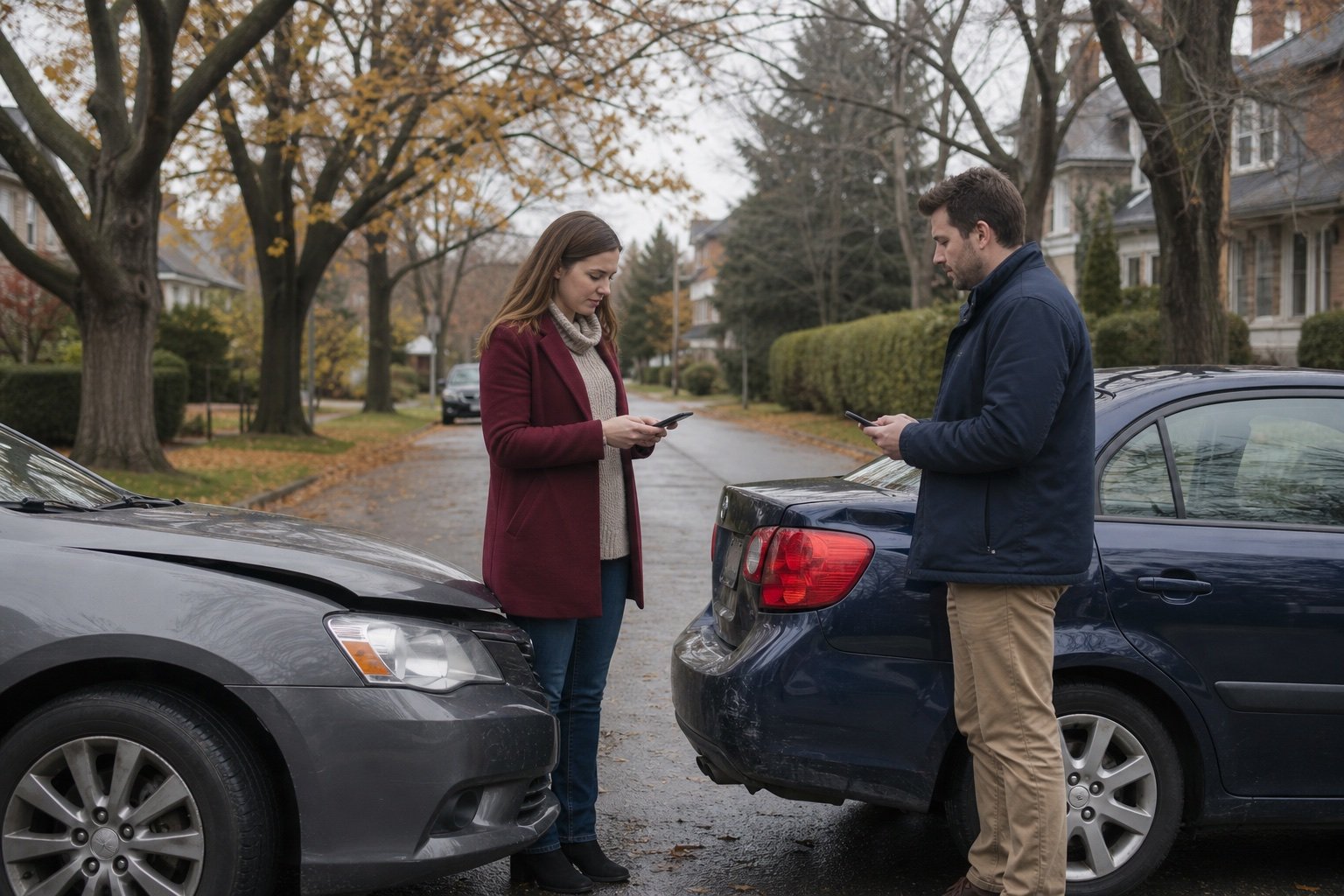
Report the event and identify the accident-benefit insurer through the priority rules. Keep proof of every notice and submission.3
Municipal involvement or a changing road condition can create separate notice and preservation concerns. Analyze them promptly.
How a personal injury lawyer may help after this collision.
The lawyer's role should be tied to this accident: identify who may be responsible, find every policy that may respond, preserve evidence and build the claim around the person's actual recovery and loss.
- Identify the applicable accident-benefit insurer
- Apply the traffic duties and reverse-onus rule accurately
- Preserve crossing, signal, video and driver-view evidence
- Develop care, income and independence losses over time
Not every file requires every step or legal representation. The work should respond to the actual dispute, evidence gap or decision that is approaching.
Sources and legal references
These official sources provide the legal and procedural foundation for this page. Their current wording and the facts of the claim control.
View 4 sources
- Ontario — Highway Traffic Act
Ontario road-use duties and the evidentiary rule that may apply when a motor vehicle injures a pedestrian or cyclist.
Back to footnote ↑ - Ontario — Statutory Accident Benefits Schedule
The current regulation governing Ontario automobile accident benefits.
Back to footnote ↑ - Ontario — Limitations Act, 2002
The basic limitation period and discoverability framework.
Back to footnote ↑ - Ontario — Negligence Act
Ontario’s framework for shared fault and contribution between responsible parties.