Ontario legal information · Ottawa and Eastern Ontario
Start with the real change, then test the legal route.
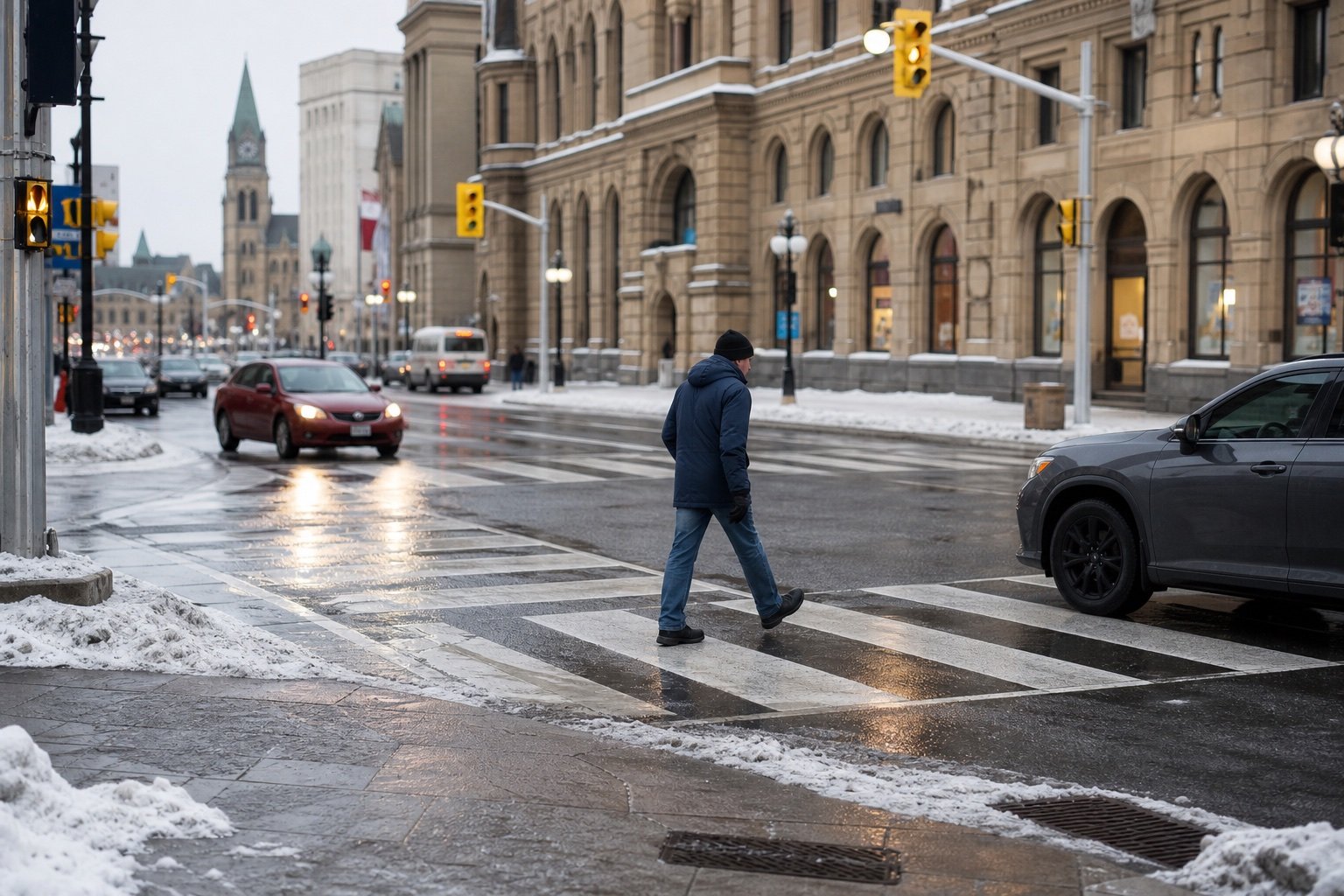
Identify the exact crossing location, signal phase, clothing, lighting, weather, vehicle approach and pedestrian movement.2
Shared-fault arguments must be tested against what the driver could see and do, not treated as automatic because the pedestrian was outside a marked crosswalk.
Keep the connected questions separate.
Responsibility
Apply the relevant statutory burden and assess reasonable driving care.
Available insurance
Pursue accident benefits through the applicable insurer-priority system.
Uncompensated loss
Develop civil loss for injury, income, care and altered independence.
Build a record that another person can verify.
Scene views, signals, video, impact and rest positions.
Emergency, rehabilitation and mobility records.
Walking, transit, work and household consequences.
Driver statements, witness contacts and insurer decisions.
Protect the next decision before the record is complete.
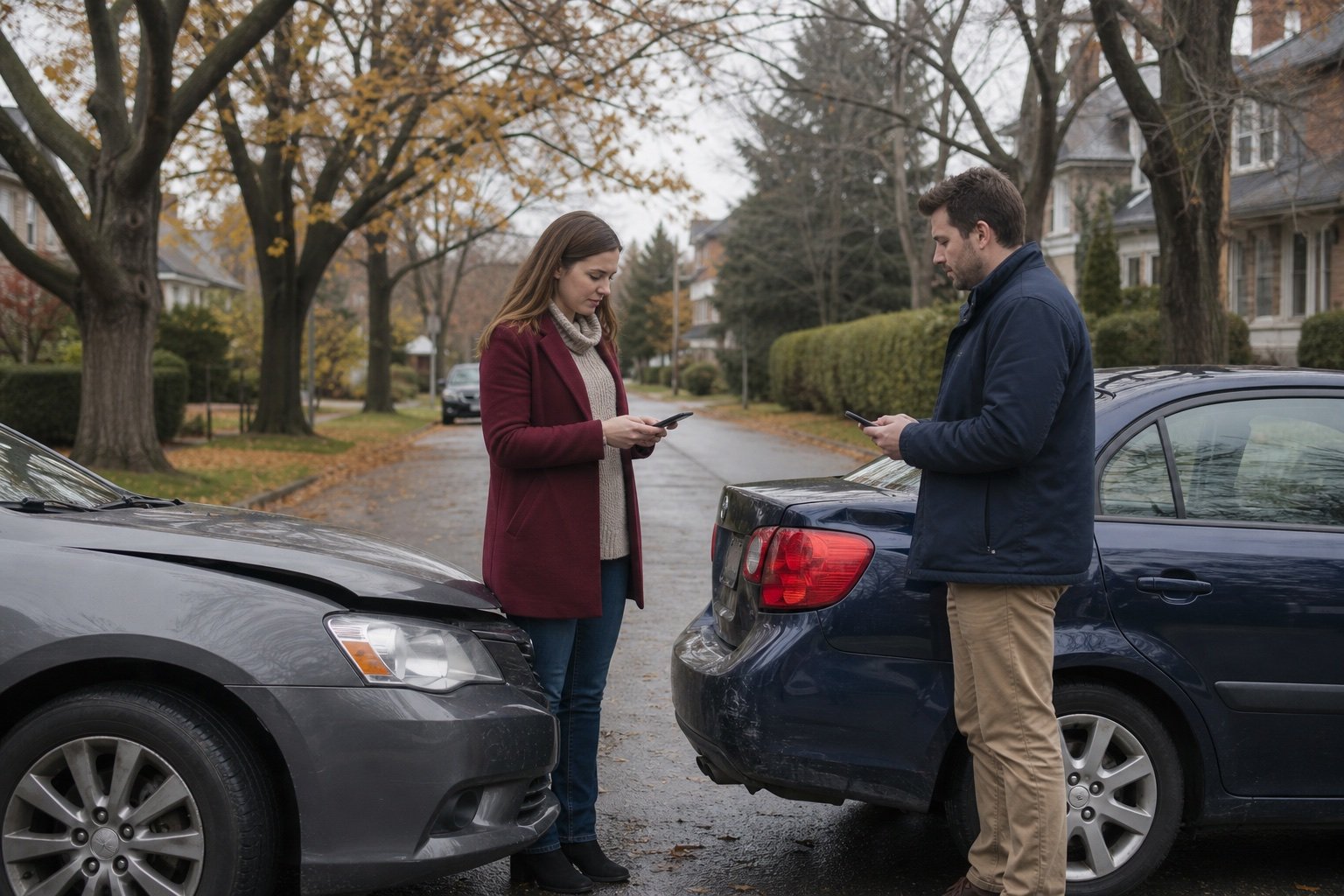
Canvass traffic, transit and private video immediately where possible.3
A serious pedestrian injury may evolve over months; preserve early evidence without forcing an early valuation.
How a personal injury lawyer may help after this collision.
The lawyer's role should be tied to this accident: identify who may be responsible, find every policy that may respond, preserve evidence and build the claim around the person's actual recovery and loss.
- Apply reverse onus accurately
- Reconstruct visibility and movement
- Find the benefit insurer
- Build long-term mobility evidence
Not every file requires every step or legal representation. The work should respond to the actual dispute, evidence gap or decision that is approaching.
Sources and legal references
These official sources provide the legal and procedural foundation for this page. Their current wording and the facts of the claim control.
View 4 sources
- Ontario — Highway Traffic Act
Ontario road-use, vehicle and reporting duties.
Back to footnote ↑ - Ontario — Negligence Act
Shared fault and contribution between responsible parties.
Back to footnote ↑ - Ontario — Statutory Accident Benefits Schedule
The current regulation governing Ontario automobile accident benefits.
Back to footnote ↑ - Ontario — Limitations Act, 2002
Ontario's basic limitation and discoverability framework.