
Ontario legal information · Ottawa and Eastern Ontario
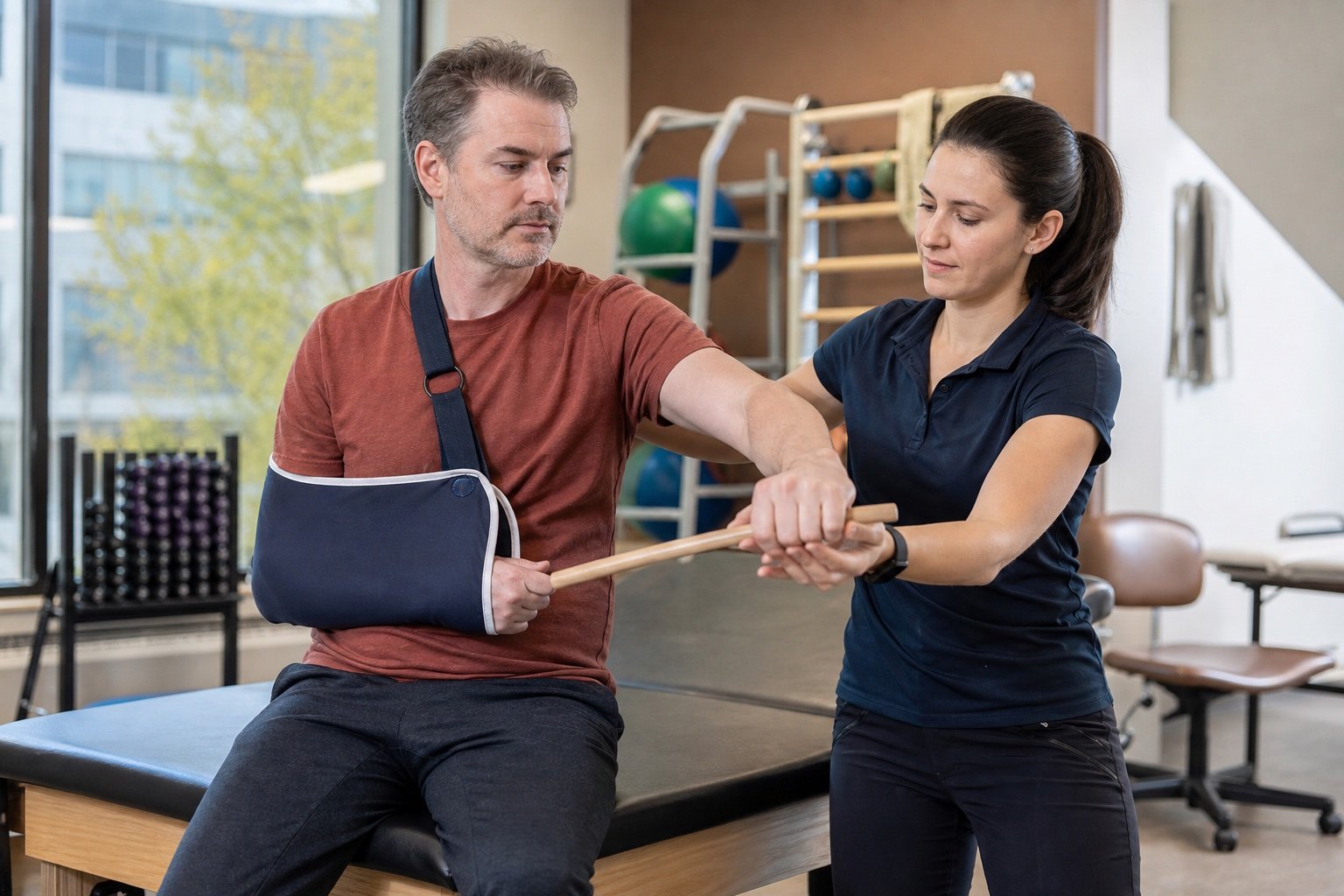
Treatment history gives the proposed plan context.
The provider should address impairments, prior care, response, barriers, goals and reasonable cost. A copied diagnosis is not a clinical rationale.2
The insurer may approve, partly approve, request an examination or deny. Separate each item and reason before deciding the response.
The insurer’s response defines the next step.
Approved
Confirm amount, provider, duration and billing conditions.
Partly approved
Identify which goods or services remain disputed.
Denied
Compare the reasons with clinical evidence and the SABS test.
Organize a plan-by-plan record.
Final form, attachments and submission proof.
Assessments, notes and functional goals.
Approval, examination or itemized denial.
Attendance, progress, barriers and revised recommendations.
Treatment discussion does not automatically extend a dispute deadline.
Calendar the decision and LAT timing while providers and the insurer communicate.3
If care proceeds privately, keep invoices without assuming reimbursement is guaranteed.
How a personal injury lawyer may help with accident benefits.
A useful review should reduce the file to a defined benefit, disputed period, governing test and evidence problem—then explain the available response in plain language.
- Review the plan’s clinical logic
- Require item-specific reasons
- Develop evidence for the disputed test
- Choose proportionate negotiation or LAT steps
Not every file requires every step or legal representation. The work should respond to the actual dispute, evidence gap or decision that is approaching.
Sources and legal references
These official sources provide the legal and procedural foundation for this page. Their current wording and the facts of the claim control.
View 4 sources
- FSRA — OCF-18 Treatment and Assessment Plan
The current approved treatment and assessment plan.
Back to footnote ↑ - Ontario — Statutory Accident Benefits Schedule
The current regulation governing Ontario automobile accident benefits.
Back to footnote ↑ - Tribunals Ontario — LAT-AABS
The official service for disputes about statutory automobile accident benefits.
Back to footnote ↑ - FSRA — Auto insurance consumer forms
Current approved Ontario automobile policy and claim forms.