Ontario legal information · Ottawa and Eastern Ontario
The MIG question is narrower than the entire injury claim.
The insurer considers whether the impairment falls within the minor-injury definition and whether evidence supports treatment outside the guideline.2
A pre-existing condition matters when supported evidence shows it prevents maximal recovery under the guideline—not simply because it appears in an old chart.
Keep classification, treatment and damages distinct.
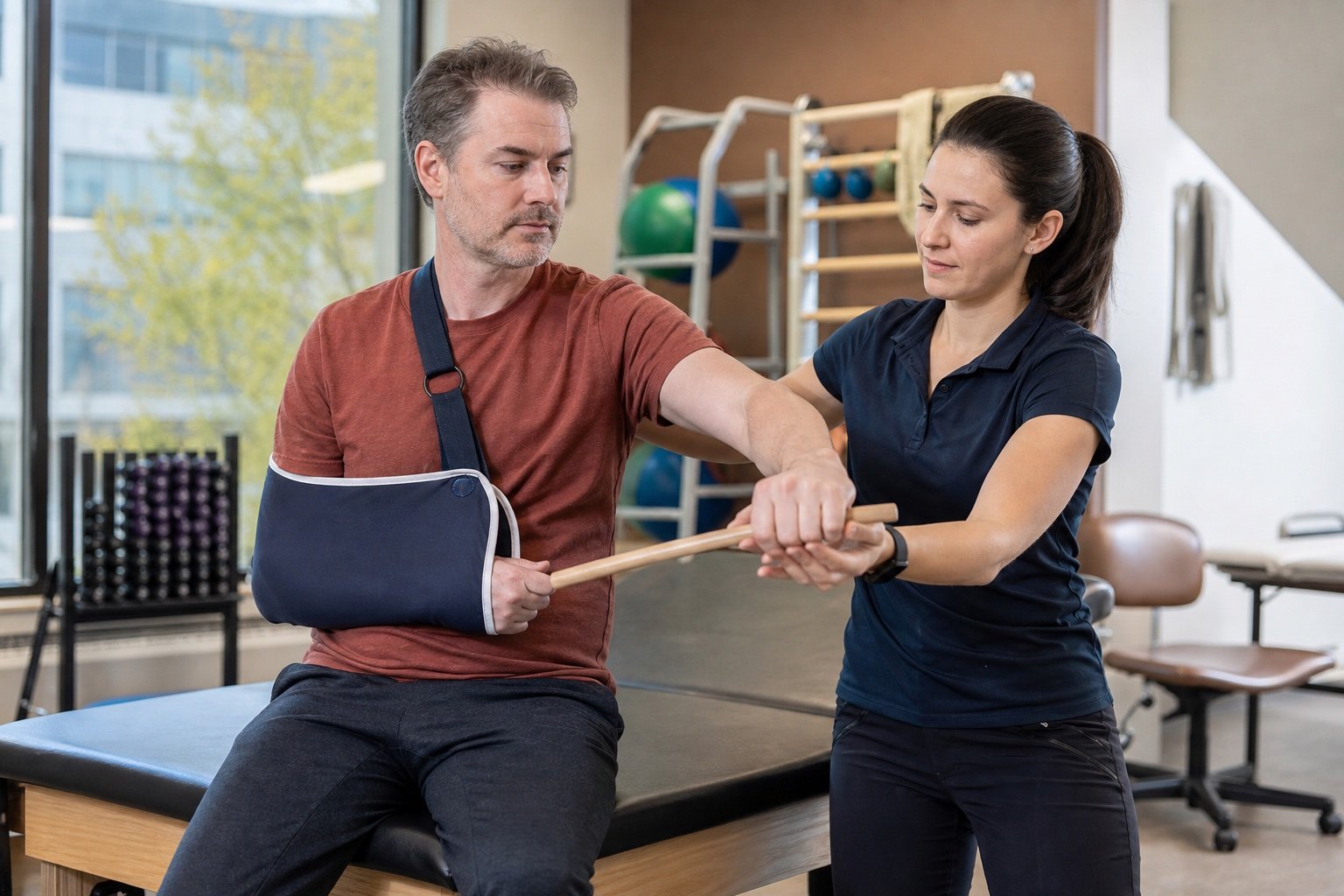
MIG treatment
Access the guideline’s structured goods and services.
Outside-MIG treatment
Use evidence directed to the statutory classification test.
Civil claim
Develop causation, prognosis and loss independently.
Focus evidence on the disputed definition.
Identify accident-related impairments precisely.
Show its documented effect on recovery, if relied upon.
Record progress, plateau and unmet goals.
Keep the classification notice and medical basis.

A classification disagreement should be addressed before care stalls.
Ask the provider to explain the clinical and statutory reason for proposed care outside the guideline.3
Keep denial and LAT timing even if a revised plan is being considered.
How a personal injury lawyer may help with accident benefits.
A useful review should reduce the file to a defined benefit, disputed period, governing test and evidence problem—then explain the available response in plain language.
- Apply the minor-injury definition
- Develop criterion-specific medical evidence
- Separate funding classification from civil value
- Choose a proportionate dispute response
Not every file requires every step or legal representation. The work should respond to the actual dispute, evidence gap or decision that is approaching.
Sources and legal references
These official sources provide the legal and procedural foundation for this page. Their current wording and the facts of the claim control.
View 4 sources
- FSRA — Minor Injury Guideline
The active Ontario Minor Injury Guideline incorporated into the SABS.
Back to footnote ↑ - Ontario — Statutory Accident Benefits Schedule
The current regulation governing Ontario automobile accident benefits.
Back to footnote ↑ - Tribunals Ontario — LAT-AABS
The official service for disputes about statutory automobile accident benefits.
Back to footnote ↑ - FSRA — OCF-18 Treatment and Assessment Plan
The current approved treatment and assessment plan.