Ontario legal information · Ottawa and Eastern Ontario
Start with the real change, then test the legal route.
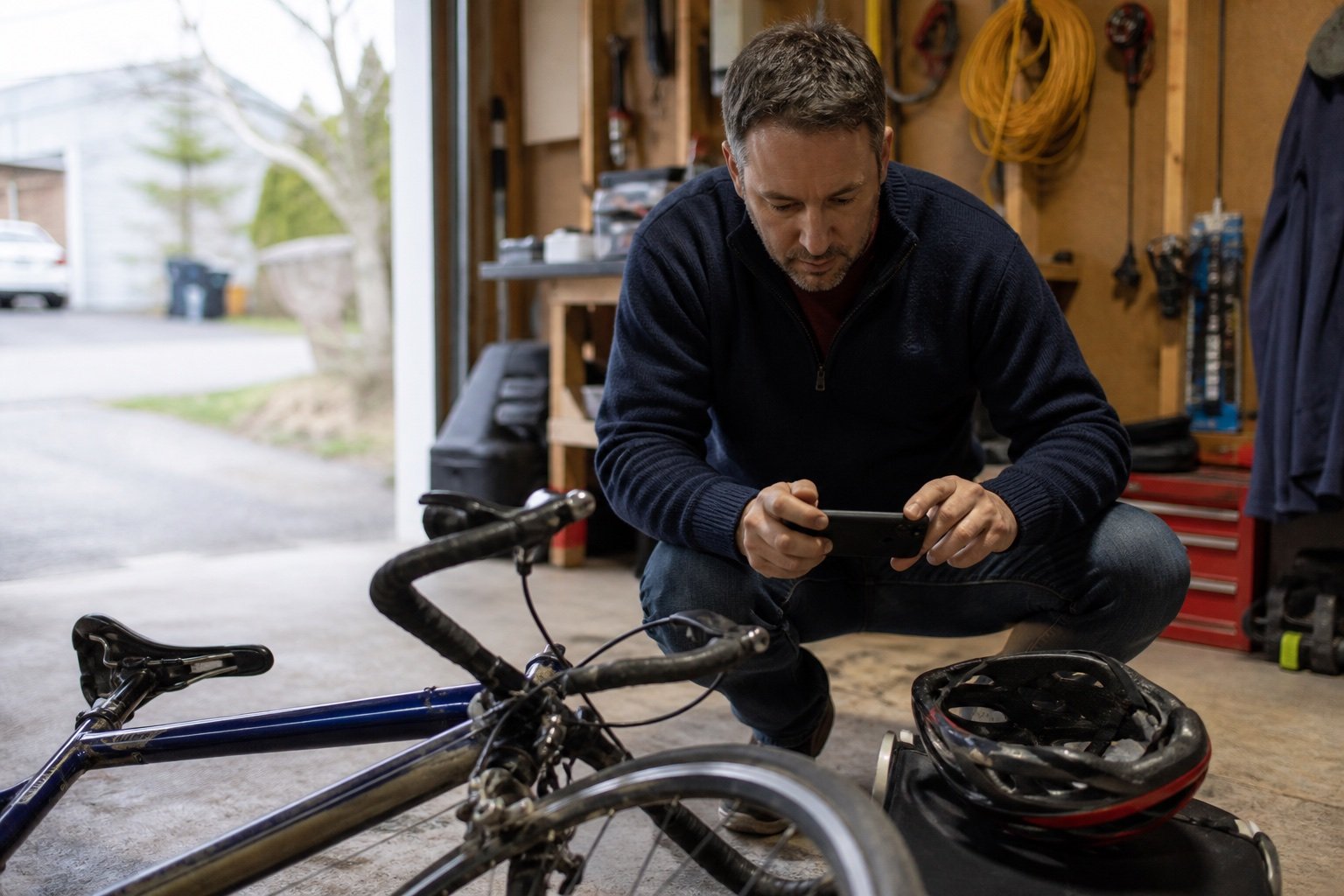
Measure door swing, parking offset, lane width, obstructions and sightlines, and canvass nearby businesses or vehicles for video.2
A secondary impact with pavement or traffic can cause the most serious injury, so preserve the complete sequence and equipment.
Keep the connected questions separate.
Responsibility
Assess driver or passenger care and the cyclist’s available response.
Available insurance
Determine which automobile policy should receive the accident-benefit application.
Uncompensated loss
Develop uninsured loss, equipment damage and future cycling or transportation needs.
Build a record that another person can verify.
Door position, bicycle, helmet, road surface and video.
Upper-limb, head, dental or orthopaedic treatment records.
Commuting, work, caregiving and recreation changes.
Police information, policy details and insurer correspondence.
Protect the next decision before the record is complete.
Nearby video and vehicle evidence can disappear quickly after an urban collision.3
Do not wait for fault agreement before reporting the accident and seeking eligible benefits.
How a personal injury lawyer may help after this collision.
The lawyer's role should be tied to this accident: identify who may be responsible, find every policy that may respond, preserve evidence and build the claim around the person's actual recovery and loss.
- Reconstruct the door movement
- Preserve bicycle and helmet evidence
- Locate the applicable automobile insurer
- Document practical transportation loss
Not every file requires every step or legal representation. The work should respond to the actual dispute, evidence gap or decision that is approaching.
Sources and legal references
These official sources provide the legal and procedural foundation for this page. Their current wording and the facts of the claim control.
View 4 sources
- Ontario — Highway Traffic Act
Ontario road-use, vehicle and reporting duties.
Back to footnote ↑ - Ontario — Negligence Act
Shared fault and contribution between responsible parties.
Back to footnote ↑ - Ontario — Statutory Accident Benefits Schedule
The current regulation governing Ontario automobile accident benefits.
Back to footnote ↑ - Ontario — Limitations Act, 2002
Ontario's basic limitation and discoverability framework.